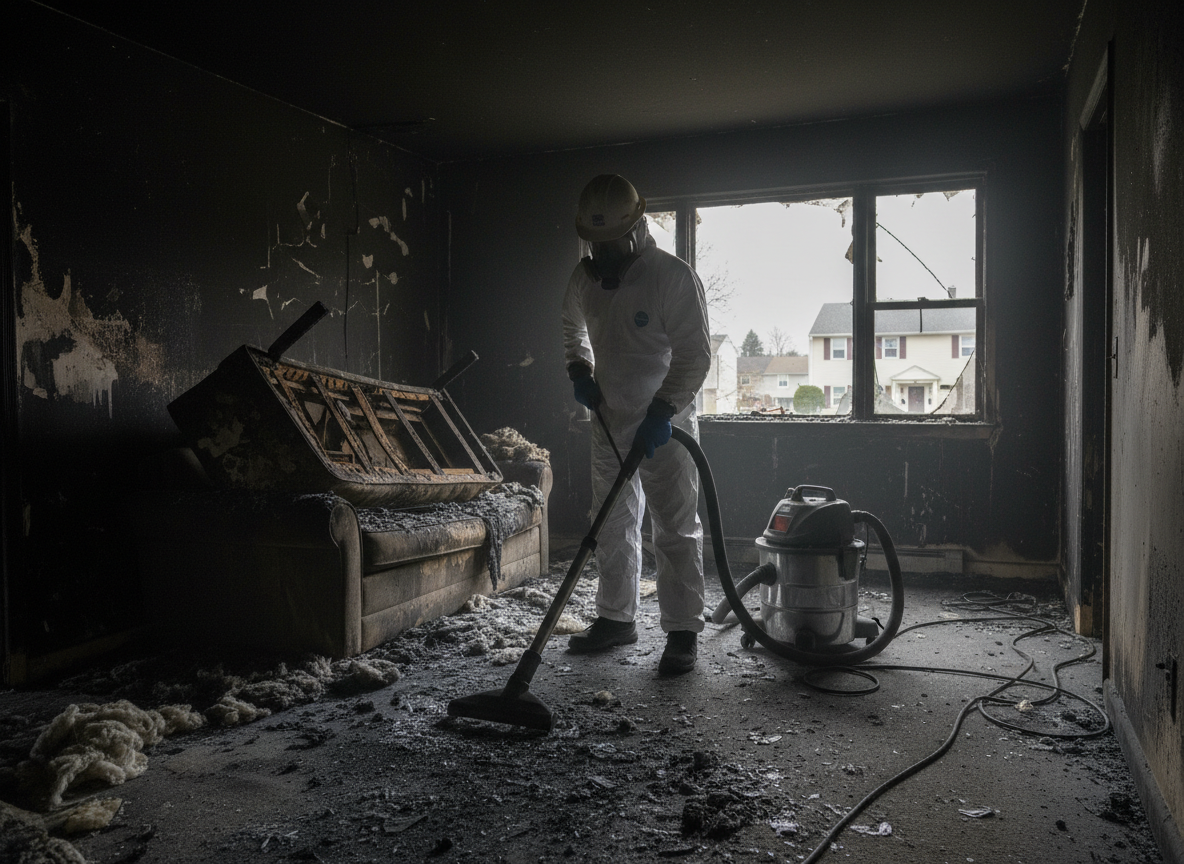
Apartment fires in Saugus often start in kitchens or from heating systems during cold winters and quickly spread soot through shared walls and HVAC in buildings common to Cliftondale and Lynnhurst. Residue sticks to plaster, lathe and older insulation, requiring targeted cleaning rather than simple wiping. We address migration into neighboring units and test air quality before sealing surfaces to prevent re-soiling.
In Essex County apartments near Saugus Iron Works or Breakheart Reservation, tight layouts and limited access points slow equipment movement and increase the chance of cross-contamination between floors. We isolate affected units with containment barriers and use HEPA filtration to capture fine particles that standard vacuums miss. Winter humidity swings can reactivate odors if surfaces are not fully neutralized before tenants return.
Nearby cities like Lynn and Malden share similar stock of mid-century apartments where electrical wiring and cabinetry trap smoke. Our crews map airflow paths from the fire origin through stairwells and vents, then clean or replace affected materials based on porosity. This prevents hidden corrosion on metal fixtures and reduces long-term odor complaints from residents above or below the source unit.
Technician insight
In Saugus, the thing that catches most people out with Apartment fire cleanup is how older plaster and lathe walls in East Saugus and Oaklandvale buildings hold soot deep in the cavities, especially after winter heating fires. Homeowners try to paint over it too soon and the smell returns when humidity rises.
Kitchen fire spreads soot through vents
A cooking fire in a second-floor Cliftondale apartment sent smoke through shared ducts into units above and below. We found heavy residue on ceiling joists and inside wall cavities that standard cleaning missed. Containment and cavity cleaning stopped migration, and clearance testing confirmed safe re-entry for all three units.
How it works
- 1
Initial Assessment
Inspect the unit and adjacent apartments to trace soot migration through walls, ducts and shared spaces.
- 2
Containment Setup
Install barriers and negative air machines to keep particles from reaching unaffected floors or neighboring units.
- 3
Residue Removal
Clean hard surfaces with appropriate agents and extract embedded soot from porous materials where possible.
- 4
Final Clearance
Test air and surfaces, then remove containment once readings meet habitability standards.
Pricing
Upfront quotes based on square footage, soot penetration depth and number of affected units; no hidden fees.