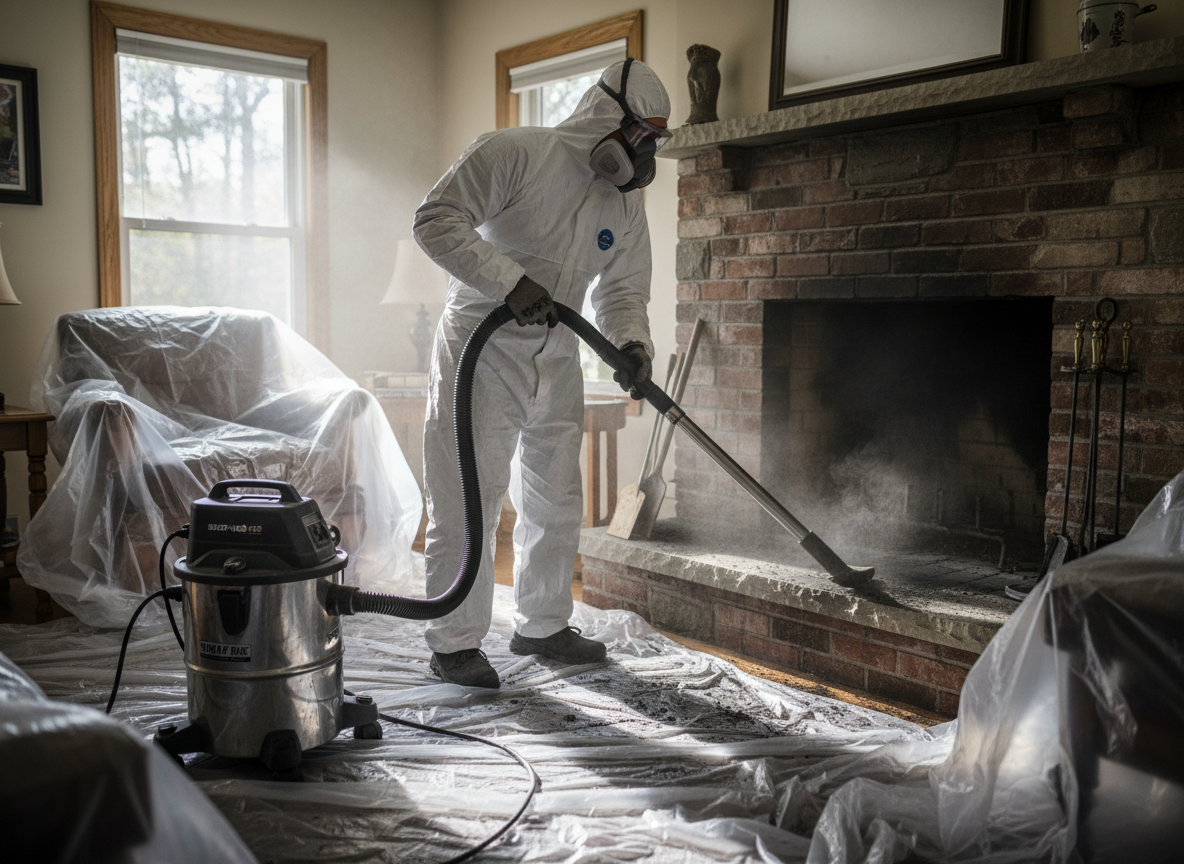
Soot from residential fires in Saugus clings to the plaster and lath walls common in pre-1960 homes throughout Cliftondale, Lynnhurst, and Oaklandvale. The area's humid continental climate with cold winters pushes soot particles deeper into porous surfaces when furnaces run, while summer humidity can reactivate odors if not fully extracted. Technicians must map airflow paths from the fire origin, often through shared walls in Golden Hills duplexes, before any cleaning begins.
Standard HEPA vacuuming fails on the oily residues left by synthetic furnishings burned in North Saugus or Oaklandvale homes. Instead, alkaline sponges and specialized emulsifiers are applied in passes, followed by air scrubbing units that capture sub-micron particles before they migrate into HVAC ducts serving multiple units. Edge cases include soot trapped behind historic brickwork near the Saugus Iron Works National Historic Site, where removal requires hand tools to avoid damaging original materials.
Homeowners in East Saugus and Lynnhurst frequently discover soot migration into attics after chimney fires, where insulation holds particles that later fall into living spaces. Proper containment with negative air machines prevents cross-contamination to adjacent properties in densely built areas near Stackpole Field. All work follows Essex County building codes for post-fire air quality testing before reoccupancy.
Technician insight
In Saugus, the thing that catches most people out with Soot removal is how cold winter air forces oily soot from oil furnaces deep into plaster walls of 1920s-1950s homes in North Saugus and Golden Hills. Homeowners wipe visible marks and push residue into the cavities where summer humidity later reactivates the smell across the whole house.
Kitchen Fire Soot Migration in East Saugus
A kitchen fire in an East Saugus Cape sent soot through shared ductwork into bedrooms. Inspection found heavy residue behind lath walls and in the attic insulation. Technicians isolated the system, extracted the soot layer by layer, and ran continuous filtration until clearance testing passed.
How it works
- 1
Initial Assessment
Inspect all affected rooms in the Saugus property, identify soot migration paths through HVAC and wall cavities, and document conditions in neighborhoods like Cliftondale.
- 2
Containment Setup
Install plastic barriers and negative air machines to isolate the work zone and prevent soot spread to unaffected areas in older Essex County homes.
- 3
Surface Cleaning
Apply appropriate cleaning agents and tools to remove soot from walls, ceilings, and contents without damaging historic finishes common near Saugus Town Hall.
- 4
Air Purification and Verification
Run HEPA filtration and conduct clearance testing to confirm soot levels meet habitability standards before returning the home to residents.
Pricing
Pricing varies with soot volume, access difficulty in older homes, and whether HVAC cleaning is required.