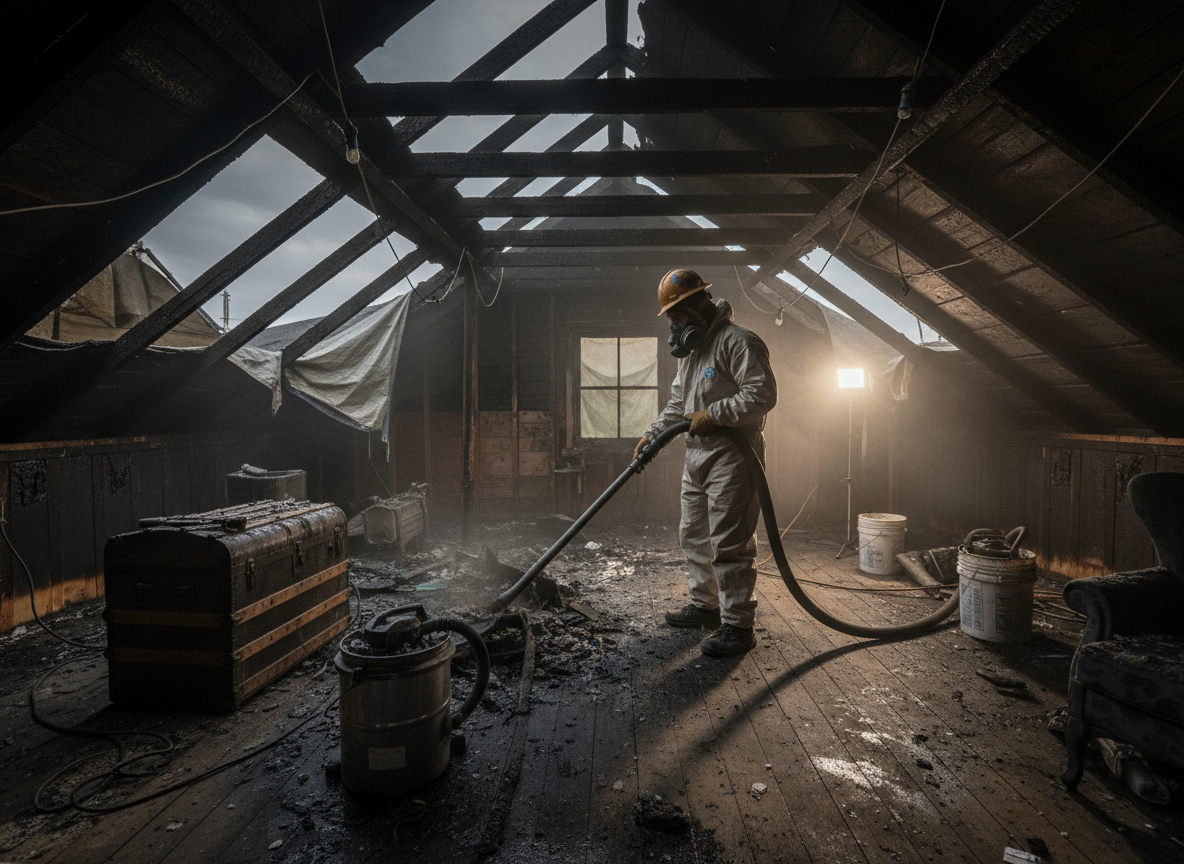
Attic fires in Saugus often start from electrical faults or chimney issues in homes built before 1970 across Cliftondale, Lynnhurst and Oaklandvale. Cold winters drive heavy use of heating systems, pushing embers or wiring failures into insulation and rafters. Restoration requires removing charred wood, treating soot on exposed beams, and addressing hidden moisture from suppression water that can freeze and expand in the humid continental climate. Crews must navigate steep rooflines and narrow access points common in East Saugus capes and colonials while protecting remaining fiberglass batts and knob-and-tube wiring that still exists in some Golden Hills properties.
Work in North Saugus and Oaklandvale frequently involves coordinating with local building officials on Essex County permits when structural joists are compromised. Smoke migrates downward through plaster ceilings into living spaces, requiring ozone treatment and HEPA air scrubbing before drywall replacement. Terrain around Breakheart Reservation means some properties sit on sloped lots where water runoff after winter thaws can re-wet attic debris if tarps fail. Technicians inspect for hidden mold growth in cellulose insulation that holds moisture longer than modern materials.
Seasonal Challenges in Saugus Attics
Winter fire calls spike when furnaces run nonstop; crews arrive with heated enclosures to prevent new ice damage during debris removal. Summer humidity slows drying of soaked roof sheathing near Saugus Iron Works properties, extending project timelines by days.
Technician insight
In Saugus, the thing that catches most people out with attic fire restoration is hidden knob-and-tube wiring running through old plaster in Cliftondale capes. When suppression water hits it during a cold snap, the wiring shorts weeks later and starts a second fire nobody expects.
Lynnhurst Cape Attic Fire
A furnace flue sparked into insulation during a January cold snap. We found extensive char along rafters and water trapped under the floorboards. After removing damaged material and drying for five days, we rebuilt with new insulation and passed inspection.
How it works
- 1
Initial Assessment and Safety
Technicians arrive within hours to document fire patterns, test for structural integrity, and secure the roof against Saugus weather.
- 2
Debris Removal and Soot Cleaning
Charred insulation and rafters are removed; remaining surfaces receive chemical sponges and HEPA vacuuming to eliminate acidic soot.
- 3
Water and Moisture Extraction
Suppression water is extracted and drying equipment placed; monitoring continues through cold nights to avoid refreezing.
- 4
Rebuild and Final Clearance
New insulation and drywall are installed to code, followed by odor neutralization and walkthrough with the homeowner.
Pricing
Cost depends on square footage affected, access difficulty in older Saugus homes, and whether winter conditions require extra drying time.