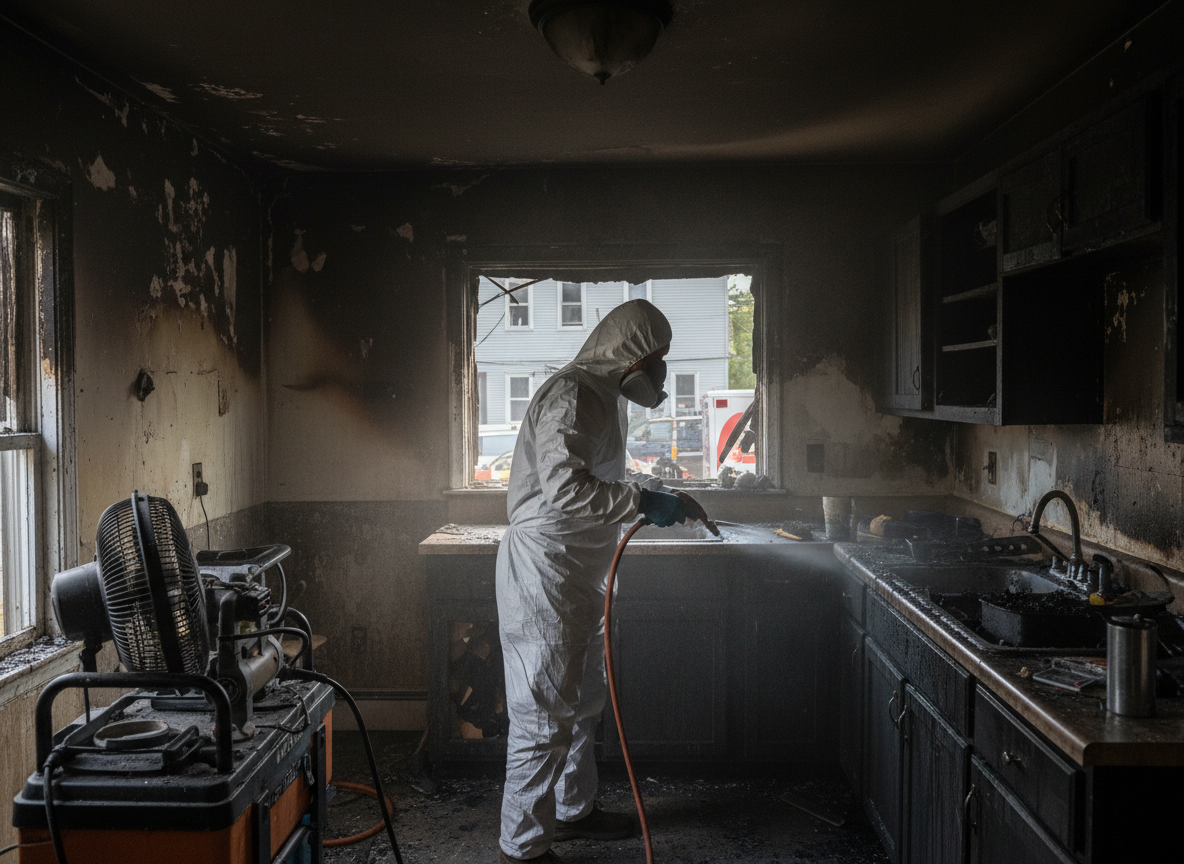
Saugus homes built before the 1960s often feature plaster-and-lath walls and balloon framing that allow smoke to travel vertically through voids and into attics. In Essex County winters, temperature swings between heated interiors and sub-freezing outdoor air cause condensation that sets soot deeper into insulation and floor joists. Technicians must open ceilings in Cliftondale capes and East Saugus ranches to reach hidden residue before ozone or thermal fogging can be applied. Failure to address these paths leaves odors that return when humidity rises in spring.
Breakheart Reservation and Stackpole Field sit on hilly terrain where wind patterns during a fire can push smoke into neighboring properties faster than flat neighborhoods in Lynn or Malden. Older oil tanks and knob-and-tube wiring common around Saugus Town Hall increase the chance of secondary electrical or fuel-line damage after the initial blaze. Restoration crews test for these conditions before drywall removal begins, because disturbing compromised wiring in cold weather creates new hazards. Documentation of every layer removed helps homeowners when insurance adjusters review claims from properties near the Saugus Iron Works.
After structural cleaning, air scrubbers run longer in humid continental summers because residual moisture in subfloors near Golden Hills can feed mold growth within days. Crews place moisture meters in multiple rooms rather than relying on surface readings alone. Final clearance includes wiping every hard surface and replacing HVAC filters that may have pulled particulates from nearby Peabody or Melrose fires. Homeowners receive a written scope that lists every material removed so they can verify the work matches the estimate.
Technician insight
In Saugus, the thing that catches most people out with fire damage restoration near me is how cold Essex County winters drive soot into the plaster voids and balloon framing of pre-1960 homes in Cliftondale and Oaklandvale. Homeowners often stop cleaning once visible surfaces look clean, but the temperature swings pull residue back out once heat returns.
Kitchen Fire Smoke in East Saugus Cape
A kitchen fire sent smoke through the second-floor ceiling of a 1950s cape. Inspection showed soot had traveled into the attic insulation and down exterior walls. Crews opened affected ceilings, cleaned framing, replaced insulation, and ran air scrubbers until readings cleared. The home was returned with no recurring odor after the first winter heating cycle.
How it works
- 1
Emergency Board-Up
Secure openings at the property in Cliftondale or Lynnhurst to prevent weather intrusion and unauthorized entry while assessment proceeds.
- 2
Detailed Inspection
Document visible and hidden damage using moisture meters and thermal imaging across affected rooms in older Saugus construction.
- 3
Soot and Odor Removal
Clean surfaces, treat porous materials, and run air filtration to address smoke that traveled through balloon framing common in North Saugus homes.
- 4
Rebuild and Final Clearance
Replace removed sections, restore HVAC systems, and verify no lingering odors remain before returning the home to the owner.
Pricing
Upfront quotes provided after on-site inspection; cost depends on extent of hidden damage in older framing and materials affected.