2026-10-24 ·
Common Winter Heating Fire Risks in Massachusetts Homes
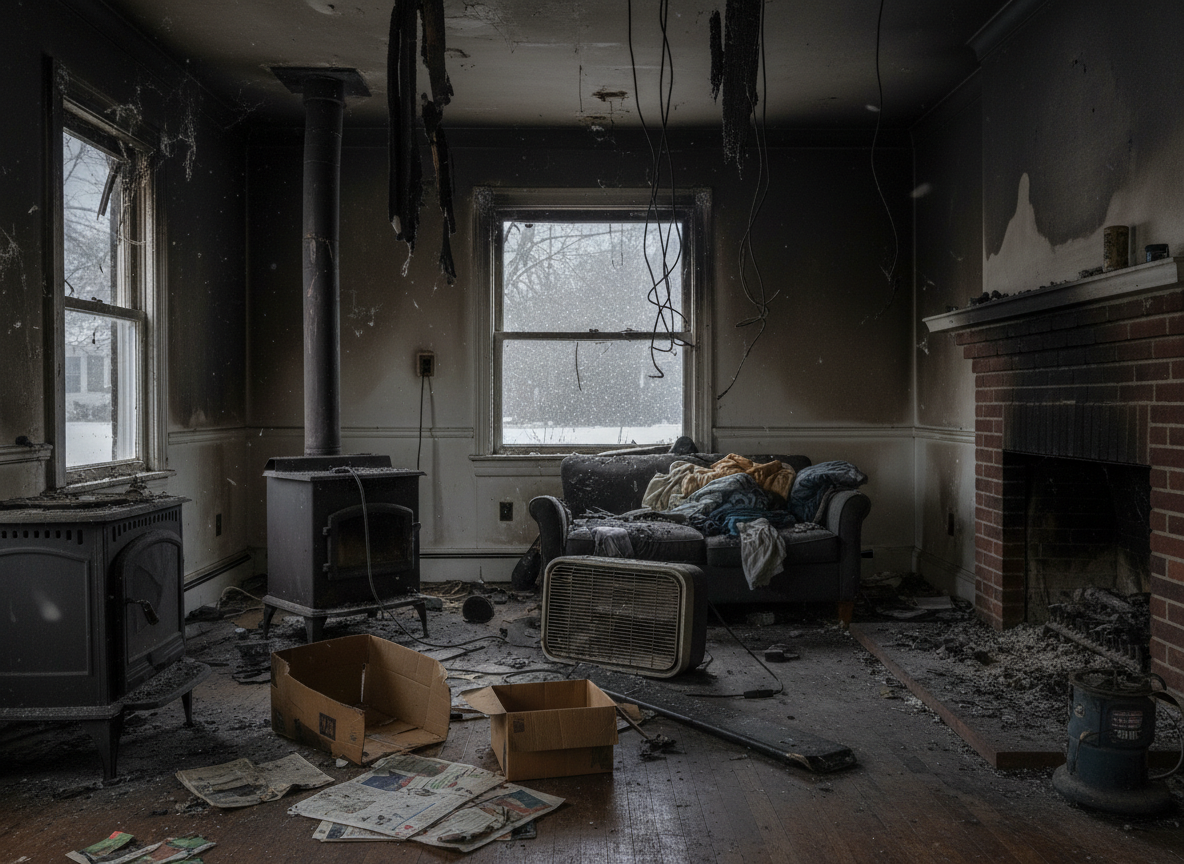
Winter heating fires in Massachusetts homes most often trace to space heaters placed too close to combustibles, chimney creosote buildup, and overloaded electrical circuits from supplemental heat sources. In Saugus, where many homes date to the early 1900s through 1960s, these risks rise once winter temperatures drop in the humid continental climate. Residents in Cliftondale, Lynnhurst, and Oaklandvale see the same patterns each year when furnaces and portable units run nonstop. Nearby cities such as Lynn, Malden, and Melrose report similar incidents tied to older wiring and wood-burning appliances.
Space Heaters in Older Saugus Homes
Portable space heaters cause a large share of winter fires because homeowners place them near curtains, furniture, or bedding in tightly insulated older homes. In neighborhoods like Golden Hills and North Saugus, many houses lack modern outlets, forcing extension cord use that overheats during extended cold snaps. These units also dry out wood framing already stressed by freeze-thaw cycles common in Essex County. Homeowners should keep heaters at least three feet from anything flammable and unplug them when leaving the room. Checking for frayed cords before each season prevents many incidents that later require fire damage clean up.
Chimney and Fireplace Hazards
Wood-burning fireplaces and stoves accumulate creosote faster during long heating seasons, especially in historic Saugus properties near the Saugus Iron Works National Historic Site. Residents in East Saugus and Oaklandvale often burn seasoned hardwood yet still face buildup when flues are not swept annually. Cold, humid air holds moisture that mixes with soot and increases ignition risk inside chimneys. Regular inspections before November help avoid structural fires that spread to attics in these densely built blocks. When damage occurs, electrical fire cleanup teams frequently address both heat and wiring issues at once.
Furnace and Boiler Failures
Central heating systems in Saugus homes built before 1970 often run on oil or gas boilers that develop leaks or ignition problems after decades of service. In Lynnhurst and North Saugus, many basements sit below the water table, allowing moisture to corrode components during warm summers before winter use begins. Blocked filters and dirty burners force units to overwork, raising fire risk at the heat exchanger. Annual professional tune-ups catch these issues early. When fires start from furnace faults, owners in Essex County commonly reference guides such as Understanding the Cost of Fire Damage Restoration in Essex County to plan next steps.
Electrical Overloads During Peak Demand
Cold snaps push homeowners to add space heaters and electric blankets, overloading circuits installed when homes were first wired. In Cliftondale and Golden Hills, knob-and-tube wiring still exists in some structures and cannot safely handle modern loads. Melting insulation near outlets or fuse boxes often precedes visible flames. Turning off unnecessary appliances and using dedicated circuits for heaters reduces this risk. Properties that suffer electrical fires benefit from targeted smoke remediation to restore livability without spreading odors through historic plaster walls.
Practical Steps for Saugus Residents
Test smoke detectors monthly and replace batteries each fall before heating season starts. Clear three feet around any heat source and schedule chimney sweeps before the first freeze. In neighborhoods such as Oaklandvale and Lynnhurst, keep heating equipment away from exterior walls where wind-driven snow can push embers back inside. When a fire occurs despite precautions, 24/7 teams at 855 Broadway respond immediately to limit spread in connected homes common throughout Saugus. Readers facing lingering effects often continue with Removing Smoke Odor from Homes in Historic Saugus Neighborhoods for detailed recovery information.