2026-10-24 ·
Removing Smoke Odor from Homes in Historic Saugus Neighborhoods
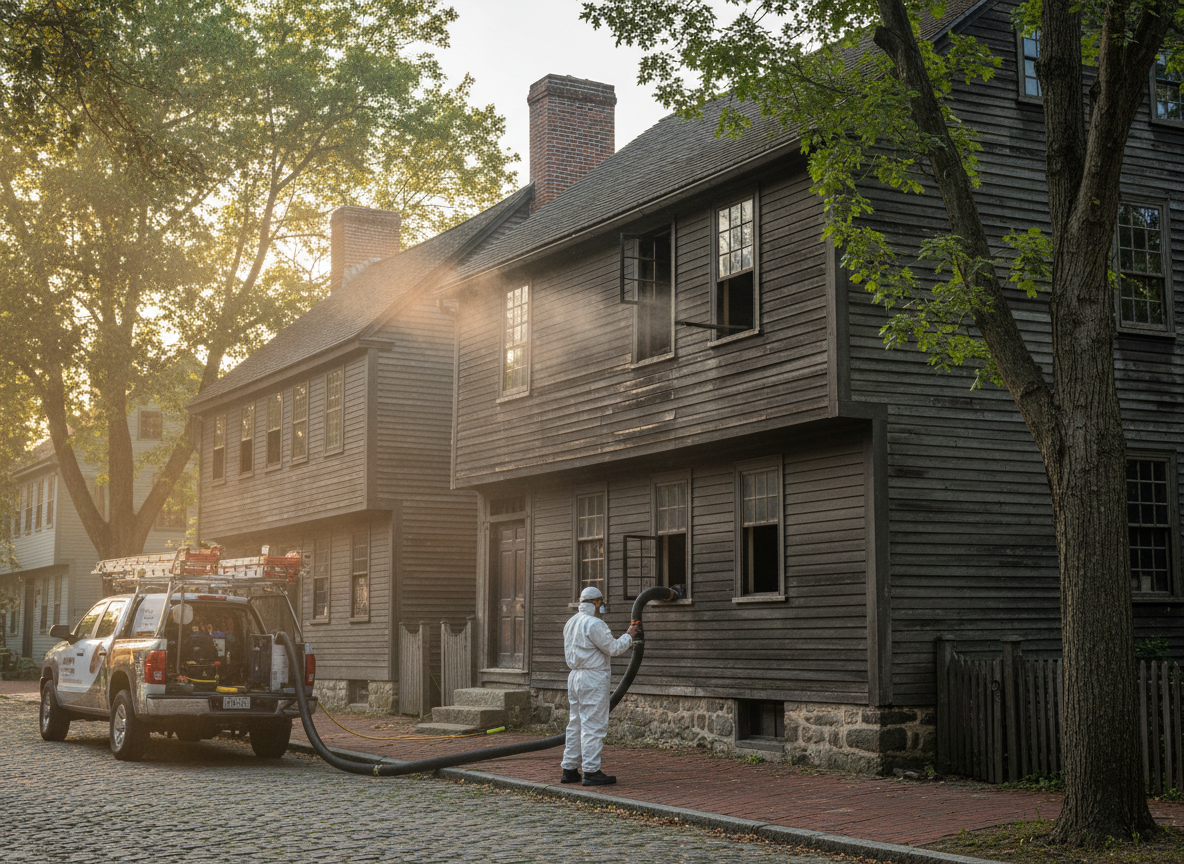
Effective smoke odor removal from homes in historic Saugus neighborhoods requires targeted neutralization of particulates embedded in plaster, wood, and insulation, often taking 5–14 days depending on fire size and building age. Older homes in Cliftondale and East Saugus feature dense wood framing and lath-and-plaster walls that trap odors deeper than modern drywall. The humid continental climate brings cold winters that slow drying and allow residues to settle into basements and attics. Technicians start by identifying all affected zones before applying treatments that break down molecules rather than mask them.
Assessing Smoke Penetration in Older Saugus Homes
Homes built before 1950 in neighborhoods such as Lynnhurst and Oaklandvale contain cavities and multiple layers of finish that allow smoke to travel far from the original fire source. A thorough inspection checks HVAC ducts, subfloors, and attic insulation where particles settle during the warm summers and remain through winter freezes. Technicians use air sampling and moisture meters to map odor paths because visible soot does not always match the smell. In Golden Hills and North Saugus, split-level homes from the 1960s add extra challenges with finished basements that trap humidity. Documenting every affected surface helps create a precise plan that avoids unnecessary demolition while ensuring no hidden pockets remain untreated.
Effective Odor Neutralization Methods
Professionals begin with HEPA vacuuming and dry-ice blasting on hard surfaces to lift residues without spreading particles. For porous materials like lathe plaster common in Cliftondale homes, thermal fogging with odor counteractants penetrates deeply and neutralizes on contact. Ozone generators follow in sealed rooms to oxidize remaining molecules, though operators limit run times to protect finishes. Activated charcoal filters and hydroxyl machines run continuously for several days afterward to capture lingering gases. In East Saugus properties near Breakheart Reservation, higher humidity levels require longer dwell times for each step. These sequenced treatments address both surface and embedded odors that standard cleaning misses.
Challenges in Historic Neighborhoods like Cliftondale and Lynnhurst
Narrow streets and older electrical systems in Saugus Center and Oaklandvale slow equipment delivery and require careful placement of generators to avoid tripping outdated panels. Cold winter temperatures below freezing extend drying times for treated surfaces and can cause condensation that reactivates odors if not managed. Soil conditions around Golden Hills properties often hold moisture that migrates into foundations, carrying smoke residues upward through floorboards. Nearby cities such as Lynn and Malden share similar housing stock, yet Saugus homes sit on slightly higher terrain that affects airflow patterns during restoration. Crews adjust equipment placement and timing to these local conditions rather than using generic timelines.
Post-Restoration Steps and Prevention
After treatment, homeowners receive guidance on replacing HVAC filters every 30 days for the first three months and monitoring for returning smells during seasonal humidity shifts. Sealing previously exposed wood with odor-blocking primers prevents reabsorption. For properties in North Saugus near Stackpole Field, regular attic ventilation checks reduce future smoke retention. Readers facing insurance questions can review how to handle insurance claims for fire damage in Saugus. Those comparing regional pricing find details in understanding the cost of fire damage restoration in Essex County. Full odor removal after fire and smoke remediation services remain available 24/7 from the location at 855 Broadway, Saugus, MA 01906.